
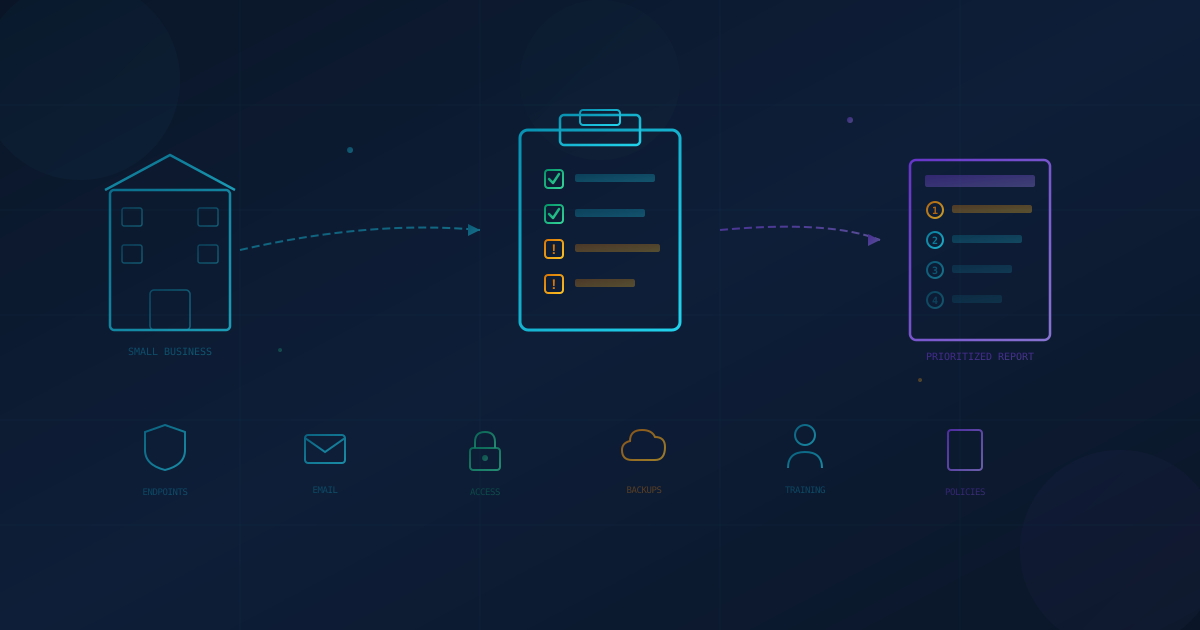
A cybersecurity assessment for small business examines how your organization handles security across people, processes, and technology. A useful one hands back a prioritized list of findings with specific recommendations, not a 50-page scare document designed to upsell services.
If you are a small or mid-size business owner searching for cybersecurity help, this is what you should expect from an assessment and what makes the difference between one that sits in a drawer and one your team can actually act on.
What a Cybersecurity Assessment for Small Business Actually Examines
A thorough assessment looks at the security areas that matter most for businesses your size. These typically include:
- Endpoint protection: Are your laptops, desktops, and servers protected with modern security tools? Is someone monitoring for threats, or are alerts going unnoticed?
- Email security: How are you protected against phishing, malware attachments, and business email compromise? Are email authentication protocols like SPF, DKIM, and DMARC configured?
- Password management and multi-factor authentication: How do employees store and manage credentials? Is MFA enabled on critical systems like email, cloud services, and VPN?
- Backups and recovery: Are backups running reliably? When was the last time someone tested that data could actually be restored?
- Patching and updates: Are operating systems and third-party applications kept current with security patches? Are updates automated or manual?
- Employee security awareness: Do employees receive regular training? Would they recognize a phishing attempt?
- Access controls: Do employees have access only to what they need? What happens to accounts when someone leaves the company?
- Incident response: If something goes wrong tomorrow, does your team know what to do? Is there a documented plan?
- Network security: Are your wireless networks secured? Is your network segmented to limit damage from a breach?
- Third-party risk: Which vendors have access to your systems or data? Have you evaluated their security practices?
The specific areas will vary depending on your business, but a good assessment covers the fundamentals rather than focusing only on exotic technical vulnerabilities.
The Difference Between a Self-Assessment and an Expert-Led Review
There are two general approaches to security assessments, and they serve different purposes.
A self-assessment is a questionnaire you complete yourself. It takes a few minutes, gives you a directional score, and helps you identify obvious gaps. Self-assessments are useful starting points, but they only reflect what you already know to ask about and cannot verify whether the answers are accurate.
An expert-led assessment involves a security professional reviewing your environment firsthand. They interview your team, examine configurations, and document observations based on what they find, not just what you report. The result is a formal report with findings specific to your business.
Which one makes sense depends on where you are. If you have never evaluated your security posture, a quick self-assessment can reveal whether there are obvious areas that need attention. If you need documentation for cyber insurance, a board, or a compliance requirement, or if you want an independent opinion you can act on, an expert-led review is the appropriate choice.
What a Useful Assessment Hands Back
The output matters as much as the process. A useful cybersecurity assessment delivers:
A prioritized list of findings
Not every security gap carries the same risk. A good assessment ranks findings by severity so you know what to address first. A critical gap in how administrative credentials are stored is more urgent than an outdated policy document.
Specific, actionable recommendations
Each finding should come with a clear recommendation. "Improve password hygiene" is not helpful. "Deploy a password manager with role-based access, rotate credentials stored in the shared spreadsheet, and enforce a minimum 14-character password policy" is something your team can actually do.
Plain language your leadership team can understand
The report should include an executive summary that non-technical readers can follow. If the only person who can interpret the results is the person who wrote them, the assessment has limited value for business decision-making.
A roadmap, not just a list
Knowing what is wrong is only part of the picture. A useful assessment tells you what to fix first, what can wait, and what the logical sequence of improvements looks like. This helps you allocate budget and time effectively rather than trying to fix everything at once.
What a Cybersecurity Assessment Is Not
It is worth clarifying what a standard security assessment does not include:
- Penetration testing: An assessment evaluates your security posture through interviews and configuration reviews. A penetration test simulates an actual attack against your systems. These are different services, and most small businesses benefit from an assessment before investing in penetration testing.
- Compliance certification: An assessment can help you prepare for privacy and industry-specific compliance requirements, but it does not certify compliance on its own. It identifies gaps so you can address them.
- A one-time fix: Security is not a project with an end date. An assessment gives you a snapshot of where you stand today. Threats evolve, your business changes, and your security posture needs ongoing attention.
How the Process Typically Works
While approaches vary by provider, a professional assessment usually follows a pattern like this:
- Discovery: The assessor learns about your business, how you operate, and what systems you rely on. This often happens through interviews with key staff members.
- Technical review: The assessor examines your environment directly, looking at configurations, policies, and controls across the security areas relevant to your business.
- Analysis and documentation: Findings are documented with observations paired against recommendations, organized by category and ranked by risk.
- Report delivery and walkthrough: You receive the written report along with a session to discuss results, answer questions, and align on next steps.
The timeline depends on the size and complexity of your organization. Most assessments for small and mid-size businesses can be completed within a couple of weeks from start to finish.
Questions to Ask Before Hiring Someone
If you are evaluating providers for a cybersecurity assessment, consider asking:
- What security areas does your assessment cover?
- How do you prioritize findings in the report?
- What does the deliverable look like? Can I see a sample?
- Do you conduct interviews, or is it purely technical?
- Is there a walkthrough session included?
- Can you help implement the recommendations, or is the assessment standalone?
A provider who cannot answer these clearly may not deliver the kind of assessment that will help your business.
What You Should Expect From Any Provider
Whether your business is in Canada or the United States, the fundamentals of a good assessment are the same. A professional assessment should produce a risk-prioritized findings report showing exactly what needs attention, followed by optimization work to address those gaps.
Privacy and data protection rules vary by country, province, and state. A security assessment can identify compliance gaps, but the recommendations need to account for the regulatory environment your business operates in. If your provider does not ask about your compliance obligations during the discovery phase, that is a sign they may deliver generic findings rather than recommendations tailored to your situation.
Starting With a Quick Check
If you are not ready for a full professional assessment, a self-guided option can help you understand where your business stands. Our free cybersecurity assessment covers 22 security areas and takes under five minutes. You get an instant score with a breakdown by category. No signup required, no sales pitch, and your answers stay private. Canadian businesses looking for a more comprehensive self-assessment can also use the free cybersecurity assessment for Canadian businesses at Cybersecurity Canada, which is built on the CCCS baseline framework and produces a detailed downloadable report.
For businesses that want a documented, expert-led review, our cybersecurity assessment services deliver the depth and formal deliverable that a self-guided quiz cannot provide. Either way, knowing where you stand is the first step toward improving your security posture.
This article is intended for general informational purposes only and does not constitute professional security, legal, or compliance advice. Organizations should consult qualified cybersecurity professionals before making operational changes based on this article.