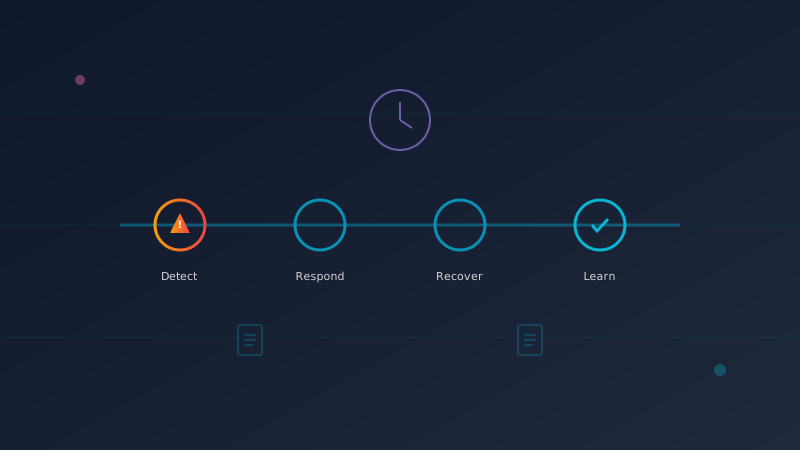
When a security incident occurs, the first hours are often chaotic. Systems may be offline, information is incomplete, and decisions need to be made quickly. Organizations that have thought through their response in advance tend to navigate these situations more effectively than those making it up as they go.
Why Advance Planning Matters
During an active incident, cognitive resources are strained. Stress affects decision-making. Key personnel may be unavailable. The pressure to "just get things working again" can lead to actions that complicate recovery or destroy evidence needed to understand what happened.
Having considered these scenarios in advance—even informally—can reduce the chaos and improve outcomes.
The Reality for SMBs
Enterprise organizations often have formal incident response plans, dedicated security teams, and relationships with specialized responders. Most small and medium-sized businesses have none of these.
This doesn't mean incident planning is irrelevant for SMBs—it means the approach needs to be proportionate. A ten-page formal plan that no one reads is less valuable than having thought through a few key questions and knowing who to call.
Key Questions to Consider
Detection: How Would You Know?
Many security incidents go undetected for extended periods. Consider:
- What would make you suspect something was wrong?
- Who would likely notice first—an employee, a customer, your bank?
- What systems generate logs or alerts that might reveal problems?
We discussed some warning signs in our article on recognizing ransomware attacks.
Communication: Who Needs to Know?
During an incident, communication becomes critical. Think about:
- Who makes decisions about how to respond?
- Who needs to be informed internally, and how quickly?
- What external parties might need notification (customers, regulators, partners)?
- Who speaks publicly if media attention occurs?
Communication missteps during incidents can cause reputational damage beyond the incident itself.
Resources: Who Would You Call?
Most SMBs don't have internal security expertise sufficient for incident response. Consider:
- Does your IT provider have incident response capabilities?
- Do you have cyber insurance, and what does it cover?
- Who would you call for legal guidance on notification requirements?
- If you needed specialized forensic help, where would you find it?
Having these answers before an incident saves valuable time when it matters most.
Continuity: How Would You Keep Operating?
Some incidents require taking systems offline for investigation or recovery. Consider:
- Which systems are most critical to your operations?
- Can you operate manually for any period of time?
- Where are your backups, and have they been tested?
- What's your tolerance for downtime before it becomes critical?
We explored the operational impact of outages in our piece on the real cost of downtime.
Common Incident Scenarios
While every incident is different, certain scenarios recur frequently:
Ransomware
Systems encrypted, operations halted, demand for payment. The pressure to pay can be intense, but payment doesn't guarantee recovery and may fund further criminal activity. We covered some considerations in our article on responding to ransomware demands.
Business Email Compromise
Attackers gain access to email accounts and use them to redirect payments, steal information, or launch further attacks. Often discovered only after financial loss has occurred.
Data Breach
Sensitive information accessed or exfiltrated. May trigger notification requirements depending on the data involved and applicable regulations.
Account Takeover
Individual accounts compromised, potentially leading to broader access. May start with a single phished credential.
The Value of Exercises
Actually walking through a scenario—even informally—reveals gaps that aren't apparent on paper. "What would we do if we came in Monday morning and all our systems were encrypted?" is a conversation worth having before it's a reality.
These discussions don't need to be formal tabletop exercises. Even a brief conversation among key people can surface important questions.
Documentation Considerations
During an incident, keeping records of what happened and what actions were taken can be valuable for:
- Understanding the timeline and root cause
- Supporting insurance claims
- Meeting regulatory requirements
- Learning from the experience
Having a simple framework for documentation—even just a shared document or log—beats trying to reconstruct events from memory afterward.
After the Incident
Recovery is rarely the end of the story. Post-incident considerations include:
- Understanding what happened and how
- Addressing the root cause to prevent recurrence
- Meeting any notification or reporting obligations
- Incorporating lessons learned
Organizations that treat incidents as learning opportunities tend to emerge more resilient.
This article is intended for informational purposes only and does not constitute professional security or legal advice. Organizations should consult with qualified professionals to develop incident response plans appropriate to their situation.